Forklift Accident Causes & How to Avoid Them — 6 Key Worksite Risks
Updated 2026-06-10
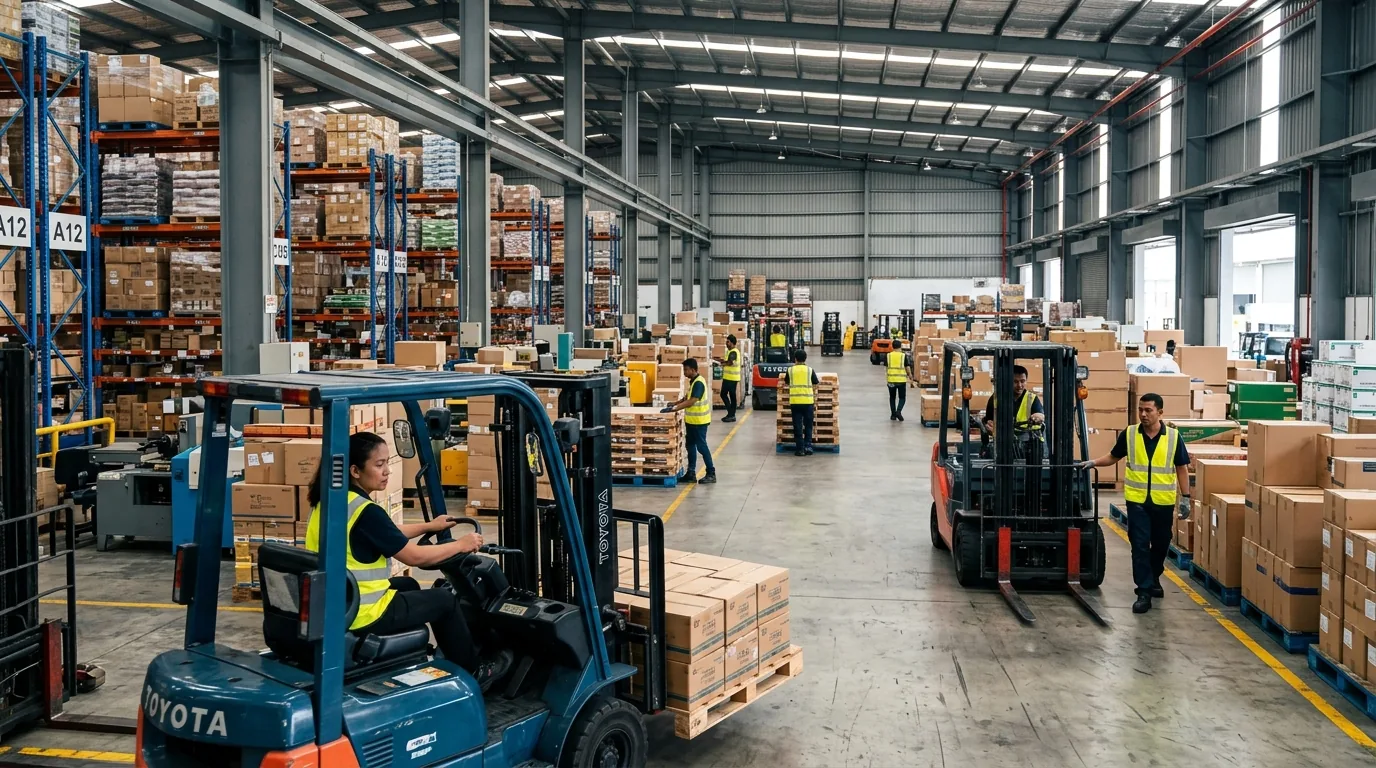
The main causes of forklift accidents are overloading, speeding, uncertified operators, unstable loads, blind spots and uneven ground. You can avoid each one with CIDB-licensed operators, maintained units, strict load limits, and clear, level work routes.
A forklift can lift tonnes of load in seconds. That same power makes it dangerous when misused. Across Malaysia's factories, warehouses and construction sites, most forklift accidents are not bad luck.
They stem from six errors you can avoid entirely. Overloading, speeding, uncertified operators, unstable loads, blind spots and uneven ground. Every one of them has a practical fix.
This article breaks down each cause and how you control the risk. The key is simple: CIDB Green Card licensed operators and units that stay well maintained. Those two things close almost every safety gap.
Overloading: Exceeding the Load Limit
The most common cause is a load that exceeds the forklift's capacity. Every unit has a load limit printed on its nameplate. Lift more than that and the forklift loses balance and can tip forward.
The risk gets worse when the load is raised high, because the centre of gravity rises. The problem is that many operators guess the weight without checking the plate. Even a small-looking pallet can weigh 1,500 kg when packed with metal or liquid.
How to avoid it: check the nameplate before every lift. Never exceed the limit, not even once.
If loads are heavy and frequent, choose a unit with the right capacity from the start. Always match the forklift capacity to your site's actual load.
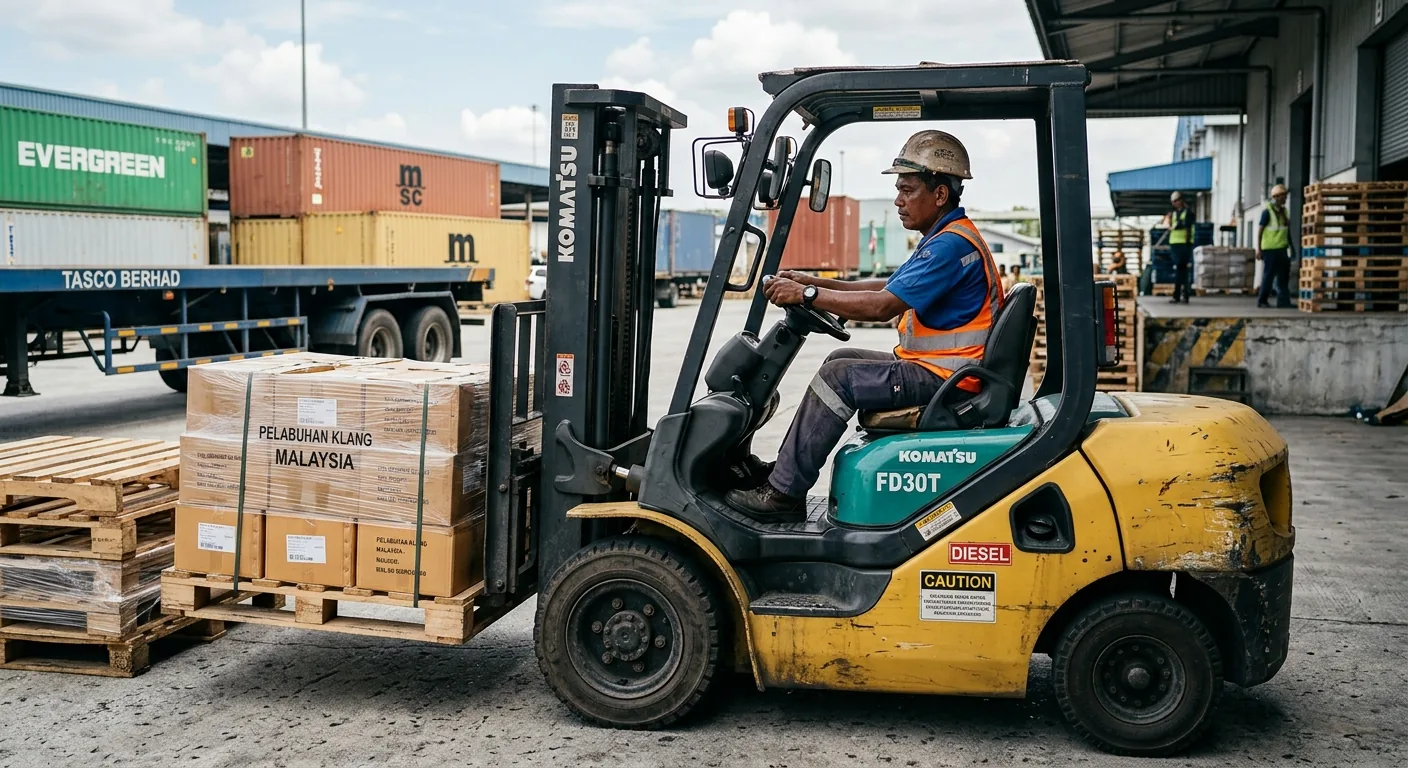
Speeding & Careless Driving
A forklift is not a car. Its weight sits at the rear and the rear-wheel steering makes it easy to tip when cornered fast. Speeding down warehouse aisles, sharp turns and hard braking are common reasons loads slip.
The unit can also strike racks and workers. In tight spaces with pedestrians, one careless second is enough to injure someone. It is even more dangerous when an operator drives while looking at a phone or chatting with a colleague.
How to avoid it: limit speed within work areas. Slow down at every corner and junction. Sound the horn in blind areas and separate forklift routes from pedestrians.
A trained operator controls speed based on the load and site conditions, not driving fast just to save time.
Uncertified Operators
Letting untrained workers operate a forklift is the most avoidable cause. It also breaks the law. Under the Occupational Safety and Health Act 1994 (Act 514) and DOSH regulations, only certified operators are allowed to operate a forklift.
A CIDB Green Card is also required for work on construction sites. Untrained operators cannot read the load limit. They do not understand how to stack loads safely and are not familiar with the unit's blind spots.
That is a recipe for an accident. How to avoid it: make sure every operator holds a valid licence and operating training. When you rent a forklift with us, a CIDB Green Card operator can be arranged.
So you do not need to worry about qualifications and compliance. Use a certified operator for every work session, no exceptions.
Unstable Loads & Poor Stacking
A load that is not secured, stacked at an angle or placed unevenly on the forks falls easily. Damaged pallets, unbalanced packages and round items that can roll add to the risk. The load can slide onto workers below.
This problem often happens when people rush or use pallets that are already broken.
How to avoid it: centre the load on both forks and push it close to the mast. Tilt the mast slightly backward to lock the load in place. Throw away damaged pallets and secure items that are tall or unbalanced.
Never lift a load above the backrest height without securing it. Proper stacking takes only a few seconds, but it can save lives.
Blind Spots & Uneven Ground
A tall load blocks the operator's forward view. The unit's mast and posts create blind spots to the sides. Many accidents involving workers happen when the operator cannot see someone in a blind area.
Add uneven, potholed or sloping ground and the tip-over risk spikes. Oily, slippery or waterlogged floors also make tyres lose their grip.
How to avoid blind spots: drive in reverse when the load blocks your view. Install mirrors at corners and use a spotter for complex jobs.
How to manage the ground: level out the work routes, fill in holes, and avoid steep slopes with heavy loads. A maintained unit with good tyres, brakes and lights gives you extra control on challenging surfaces.
The Solution: Trained Operators + Maintained Units
Notice one pattern. Almost every cause above is covered by two things: a certified operator and a unit in good condition. A trained operator knows how to read the load limit, control speed, stack loads and read blind spots.
A maintained unit gives you brakes, tyres and hydraulics you can rely on when conditions turn critical. When you rent with sewaforklift.my, service and maintenance are already included in the rental. So the unit stays safe without you managing a workshop yourself.
A CIDB Green Card operator can be arranged to suit your site's needs. All-risks insurance is also available as an add-on.
Rather than carrying the risk of an old, unserviced unit, rent a well-kept unit with a qualified operator. Contact us via WhatsApp to discuss your site's safety needs.
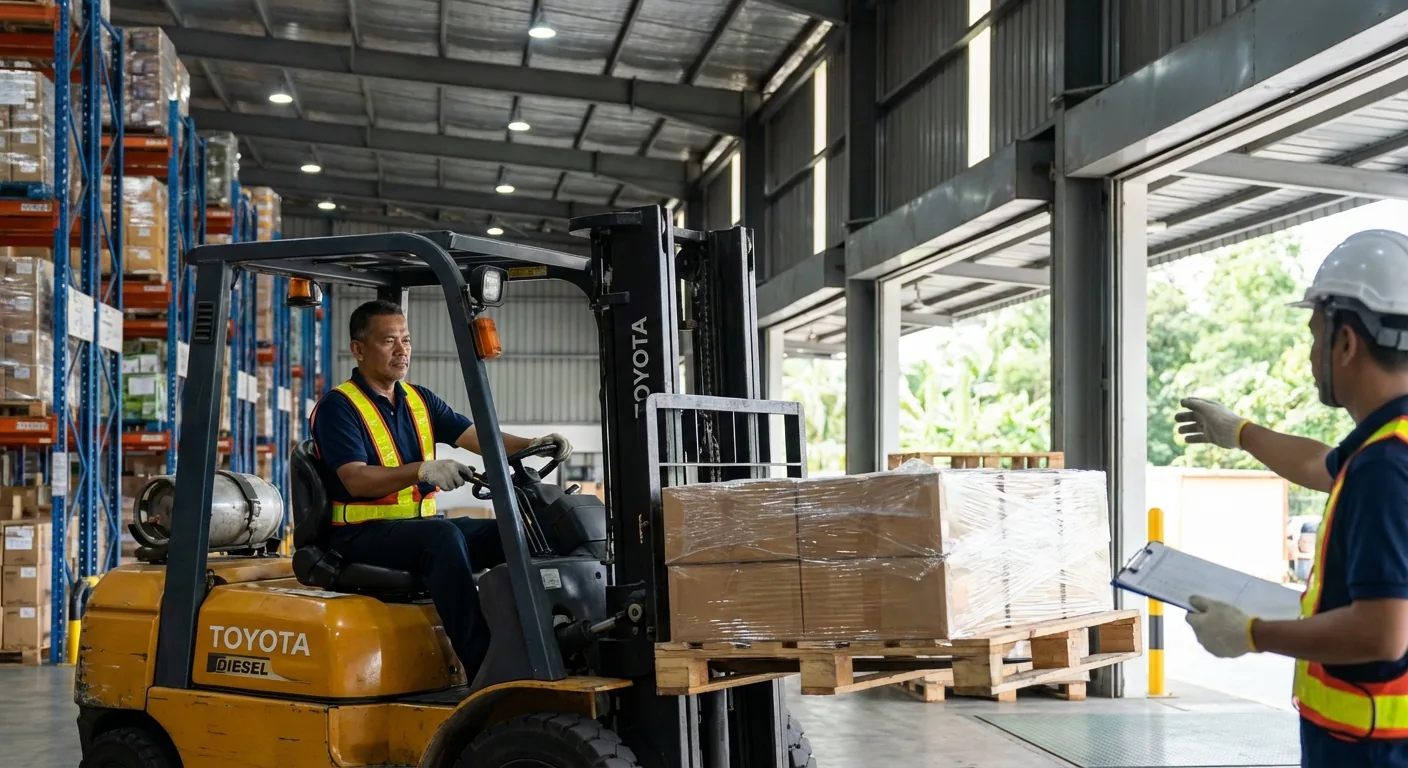
Summary — Checklist
- ✓Check the nameplate and never exceed the load limit on every lift
- ✓Limit speed, slow down at corners, and sound the horn in blind spot areas
- ✓Ensure every operator is certified and arrange a CIDB Green Card operator for construction sites
- ✓Centre and secure the load; throw away damaged pallets before use
- ✓Drive in reverse when the load blocks your view and use a spotter for complex jobs
- ✓Level out work routes, fill in holes, and avoid steep slopes with heavy loads
- ✓Rent a maintained unit with service included so brakes, tyres and hydraulics stay in good shape
FAQ
What is the most common cause of forklift accidents?
Overloading and speeding are the two most common causes. They are followed by uncertified operators and unstable loads. Almost all of them can be avoided with a licensed operator and a maintained unit.
Must a forklift be operated by a certified operator in Malaysia?
Yes. Under Act 514 and DOSH regulations, only certified operators are allowed to operate a forklift. A CIDB Green Card is also required for work on construction sites.
Can I rent a forklift together with a certified operator?
Yes. A CIDB Green Card operator can be arranged with the rental, so you do not need to worry about qualifications and compliance. Contact us via WhatsApp to arrange it.
How does a maintained unit reduce the risk of accidents?
Good brakes, tyres, hydraulics and lights give you better control on challenging sites. When you rent with us, service and maintenance are already included so the unit stays safe.
What should I check before using a forklift each day?
Check the brakes, tyres, hydraulics, lights and horn, plus the load limit plate. Make sure the work route is level and the operator is certified. This quick inspection prevents many problems.
Further Reading
Need to Rent a Forklift?
From RM200/day — diesel, electric, reach truck. Accurate quote within 1 hour.
WhatsApp for a Quote