Forklift Safety Guide for Worksites — Stay Act 520 Compliant, Prevent Accidents
Updated 2026-06-02
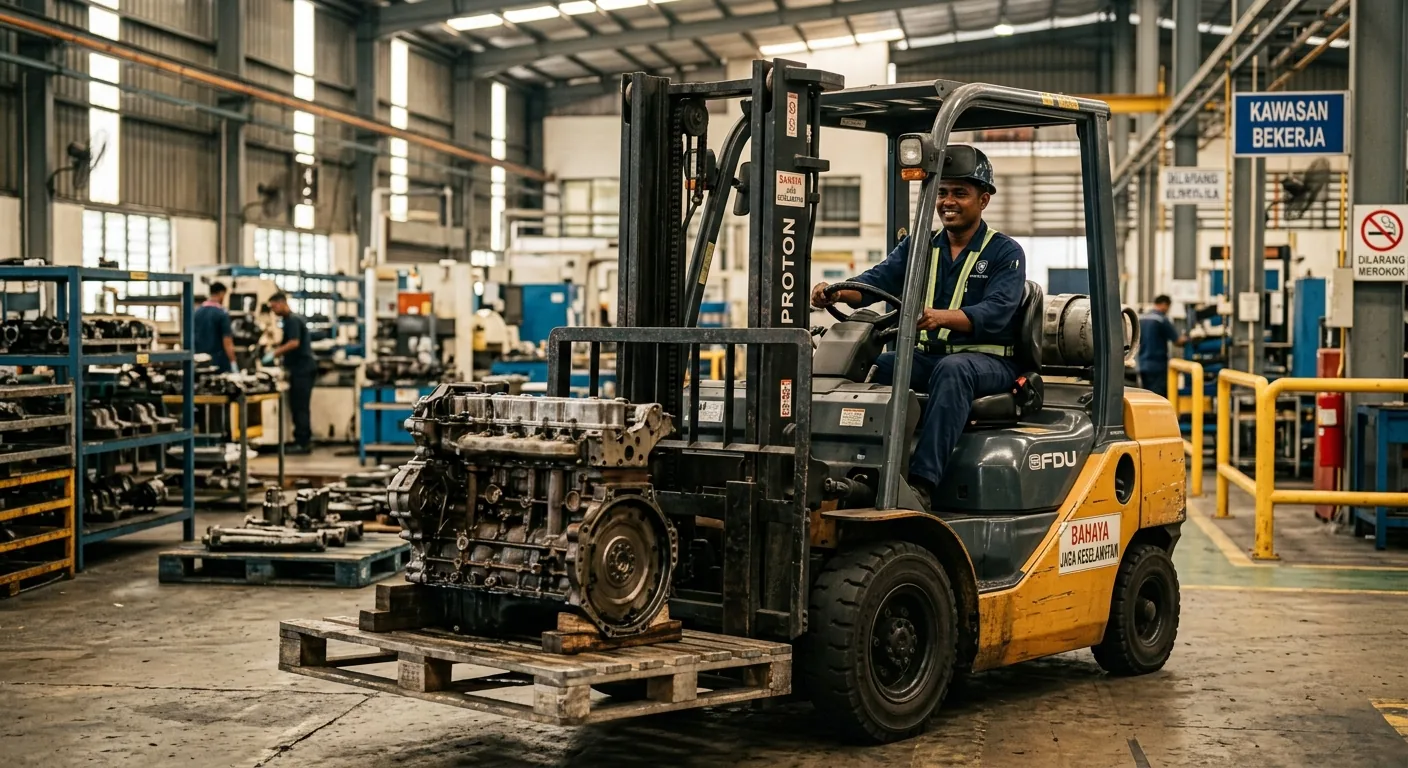
Forklift safety on site starts with a certified operator (CIDB Green Card, DOSH compliant) and a written SOP. Separate pedestrian walkways, cap speed to walking pace, and never exceed the load limit on the capacity plate. Daily pre-operation inspections and scheduled maintenance are mandatory under Act 520.
A forklift speeds up your lifting and moving work. But it is also one of the most common causes of worksite accidents in Malaysia. Rushed operators, overloading, and unseparated walkways can lead to serious injury or death.
Under the Occupational Safety and Health Act 1994 (Act 520), employers are responsible for ensuring safe forklift operations. This guide lists practical steps you can put in place today. It covers certified operators, speed limits, and maintenance.
Every unit you rent from us can be arranged with a CIDB Green Card operator. So your site is compliant from day one.
Certified Operators: CIDB Green Card & DOSH
Only trained, certified operators are allowed to handle a forklift. On a construction site, the operator must hold a valid CIDB Green Card. Operations must follow DOSH (Department of Occupational Safety and Health) guidelines.
Act 520 places the responsibility on the employer. You must ensure workers are competent before they operate machinery. Untrained operators are the leading cause of tip-overs, dropped loads, and pedestrian collisions.
Training covers how to balance a load, read the capacity plate, and turn in tight spaces. Do not let workers experiment without certification. If you have no in-house operator, we can arrange a Green Card operator together with the rental unit.
Takeaway: confirm every operator holds a valid Green Card. Record their certificate in your site safety file.
SOPs & Daily Pre-Operation Inspections
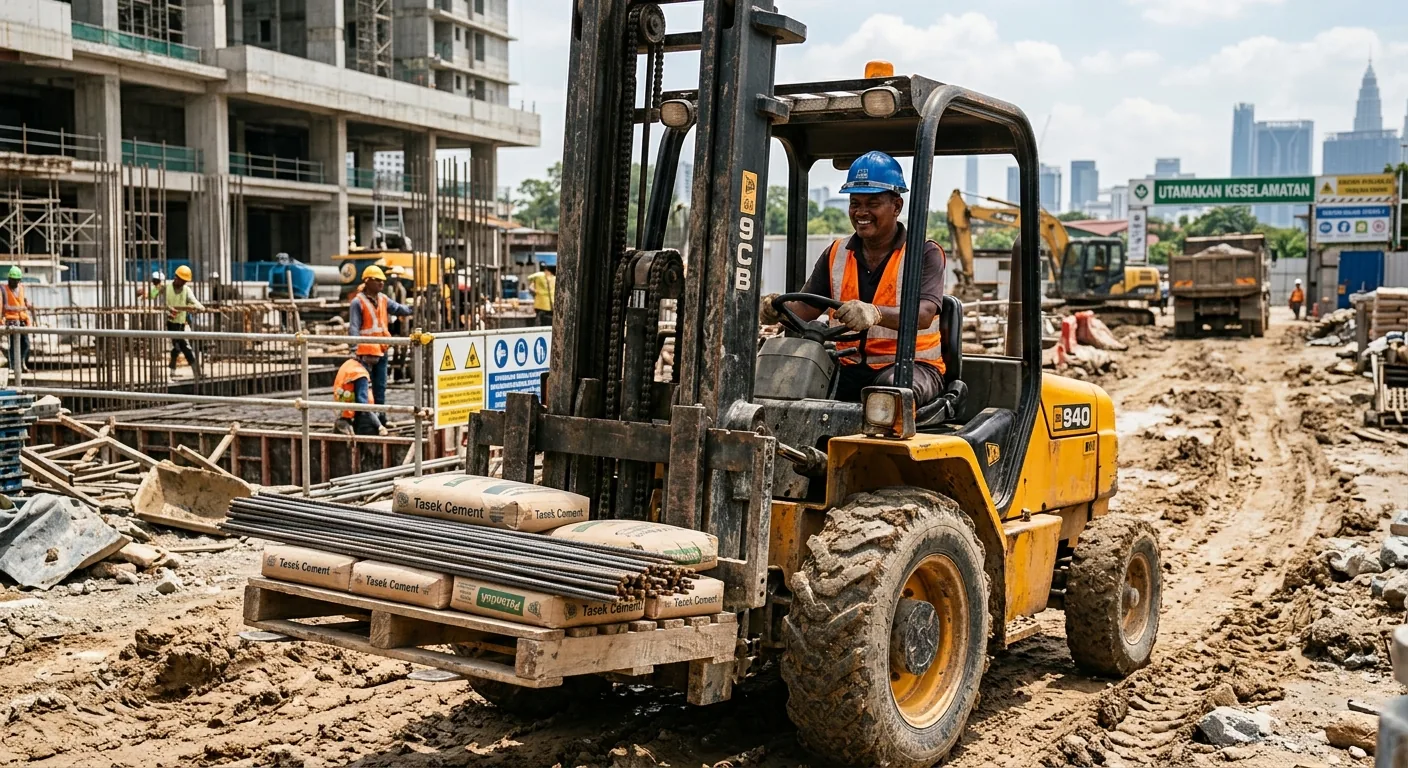
Every site needs a written SOP for forklift handling. Verbal instructions are easily forgotten. The SOP sets out who may drive, the permitted routes, loading procedures, and what to do when a fault is found.
Before a shift begins, the operator must carry out a daily inspection. Check the brakes, horn, lights, tyres, forks, lift chains, and the oil or battery level. Electric and lithium forklifts also need their charge level and cables checked.
Any fault must be recorded. Take the unit out of service until it is repaired. Service and maintenance are included in our rental package, so a unit that fails inspection can be reported and repaired without you hunting for an outside mechanic.
Takeaway: keep a printed inspection checklist on every unit. Hold daily records signed by the operator.
Separate Pedestrian Areas
Collisions between forklifts and workers on foot are among the deadliest accidents. Forklifts have large blind spots. This is especially true to the rear and when a tall load blocks the forward view.
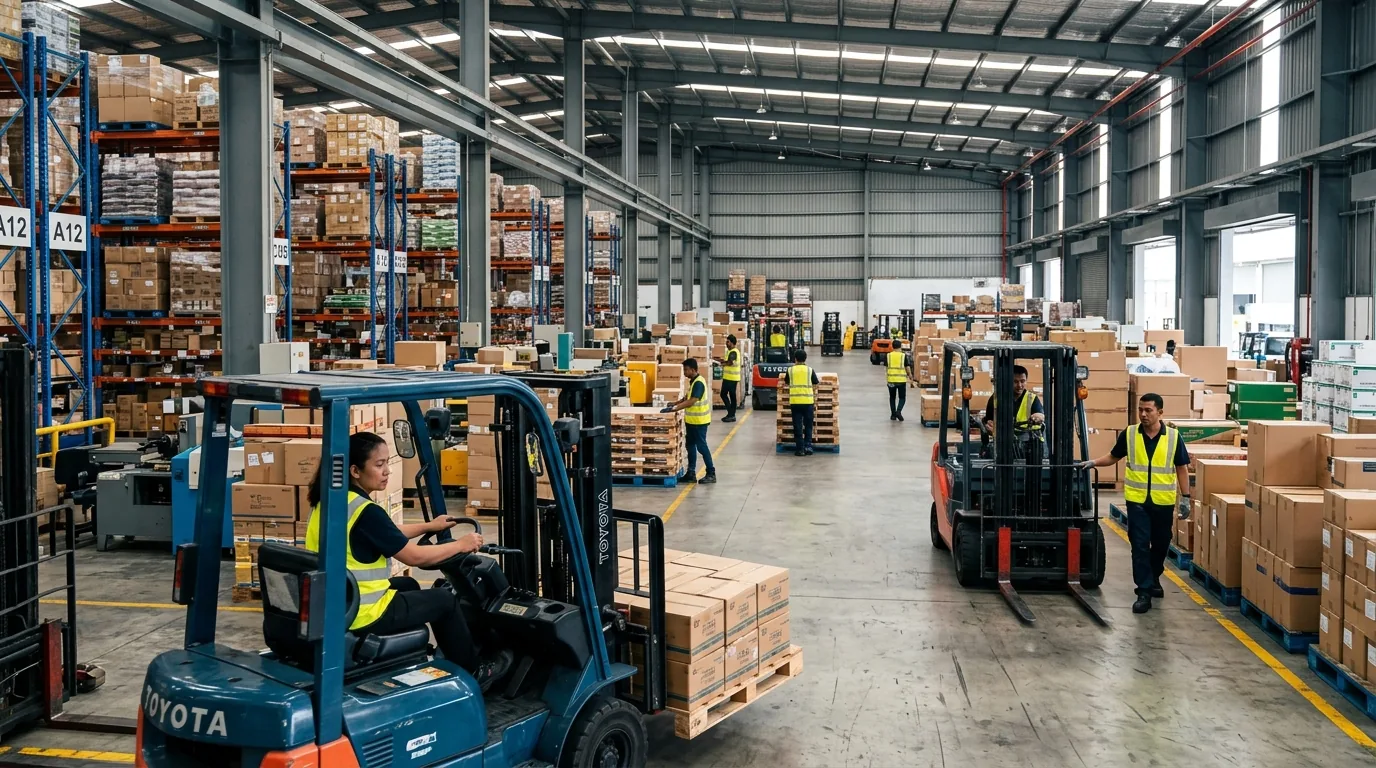
Mark pedestrian walkways with clear yellow lines. Separate them from forklift routes wherever possible. Install convex mirrors at blind corners, and put warning signs at warehouse entrances.
Operators should sound the horn at every intersection and doorway. In congested areas, use a turn-taking system so forklifts and pedestrians do not move at the same time. Workers should also wear reflective vests.
Takeaway: paint separate pedestrian walkways. Install convex mirrors at every blind corner this week.
Safe Speed & Load Limits
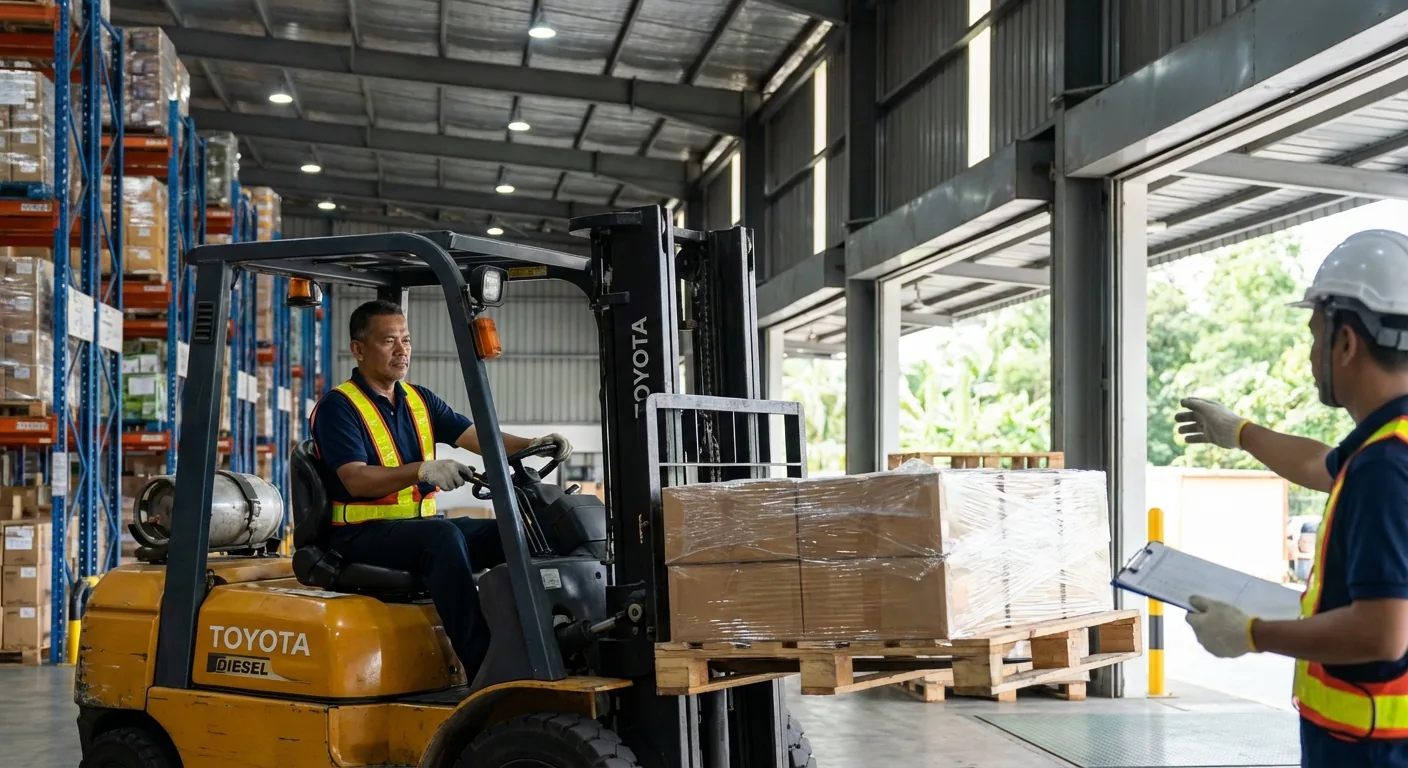
Driving fast inside a warehouse causes tip-overs and slipping loads. Set a sensible speed limit. Typically around walking pace in congested areas, and enforce it consistently.
Every forklift has a capacity plate. It states the maximum load limit by lift height and centre of gravity. Never exceed these limits.
Overloading lifts the rear wheels and the unit loses control. Distribute the load so it is balanced across both forks. Keep the load low while moving.
Choose the forklift type that suits the job. A reach truck for tall narrow racking, diesel for heavy loads outdoors, electric or lithium for enclosed indoor spaces. Takeaway: display the speed limit at the entrance and train operators to read the capacity plate before every heavy lift.
Scheduled Maintenance & Records
An unmaintained forklift is a time bomb. Weak brakes, a hydraulic leak, or a cracked fork can fail at the most critical moment. Scheduled maintenance following the manufacturer's schedule keeps the unit safe and saves you from major repair costs.
Keep a service log for each unit. Note the service date, parts replaced, and the next inspection due. This also serves as proof of compliance if DOSH inspects your site under Act 520.
Electric and lithium forklifts need periodic battery health monitoring. When you rent from us, service and maintenance are included in the package. We handle the repairs so your unit stays safe.
Note: this is included repairs, not free unit replacement. Takeaway: keep a written service log for every unit. Do not delay any repair flagged during the daily inspection.
Summary — Checklist
- ✓Confirm every operator holds a valid CIDB Green Card and record the certificate in your site safety file
- ✓Prepare a written SOP and a printed daily inspection checklist on every forklift unit
- ✓Paint separate pedestrian walkways and install convex mirrors at blind corners
- ✓Display the speed limit at the entrance and enforce walking pace in congested areas
- ✓Train operators to read the capacity plate and never exceed the maximum load limit
- ✓Keep a scheduled maintenance log for each unit as proof of Act 520 compliance
- ✓Take any unit that fails inspection out of service and repair it before reuse
FAQ
Is a CIDB Green Card mandatory for forklift operators?
On a construction site, yes. The operator must hold a valid CIDB Green Card, and Act 520 requires the employer to ensure operators are competent and follow DOSH guidelines. We can arrange a Green Card operator with your rental unit.
What should be checked in a daily forklift inspection?
Check the brakes, horn, lights, tyres, forks, lift chains, and the oil or battery charge level. Record any fault and take the unit out of service until it is repaired. Do this inspection before every shift begins.
How do you prevent a forklift from tipping over?
Never exceed the load limit on the capacity plate. Distribute the load evenly across both forks, keep it low while moving, and follow the speed limit. Driving fast and overloading are the leading causes of tip-overs.
Is maintenance included when I rent a forklift?
Yes, service and maintenance are included in our rental package, and we handle the repairs so the unit stays safe. Note that this is included repairs, not free unit replacement. Contact us for package details.
What is a safe speed limit for a forklift in a warehouse?
In congested areas with pedestrians, cap it to walking pace. Set a written limit in your SOP and enforce it consistently. High speed in tight spaces is the leading cause of collisions and slipping loads.
Further Reading
Need to Rent a Forklift?
From RM200/day — diesel, electric, reach truck. Accurate quote within 1 hour.
WhatsApp for a Quote