Forklift Pre-Use Inspection Checklist — A Daily Anti-Breakdown List
Updated 2026-06-12
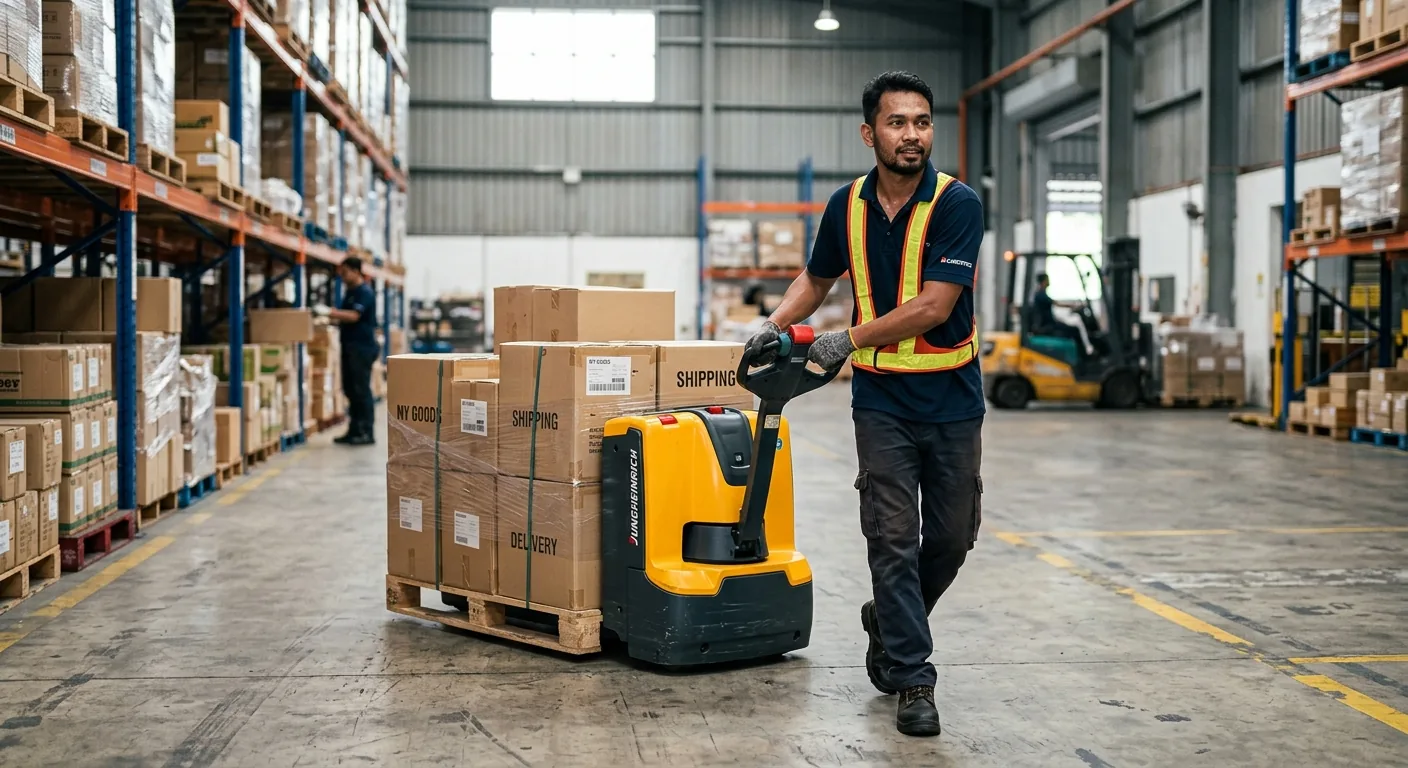
A forklift pre-use checklist is a daily 8-item inspection: tyres, brakes, horn, lights, forks or mast, oil or battery level, leaks, and the seatbelt. The operator does it before each shift in 5 minutes, and records every finding to avoid accidents and downtime.
Forklift accidents often start with small problems that get overlooked, such as soft brakes, cracked forks, or bald tyres. A daily inspection catches these issues early, before they become a major repair bill or injure a worker.
Act 520 (Factories and Machinery) and DOSH guidelines require operators to inspect machinery before operation. This article gives you a complete 8-item forklift checklist and how to record your findings.
Why a Daily Forklift Checklist Matters
A forklift weighs between 2 and 5 tons. When one component fails while lifting a load, the result can be fatal: the load drops, the forklift tips over, or a worker is crushed.
A 5-minute daily inspection catches problems before they turn dangerous, and faults caught early are far cheaper to fix. A unit breaking down mid-shift also halts the entire warehouse operation.
Act 520 and DOSH guidelines require machinery to be safe to operate. Operators holding a CIDB Green Card are trained to run these checks, so make the checklist mandatory every shift.
Tyres, Brakes and Steering
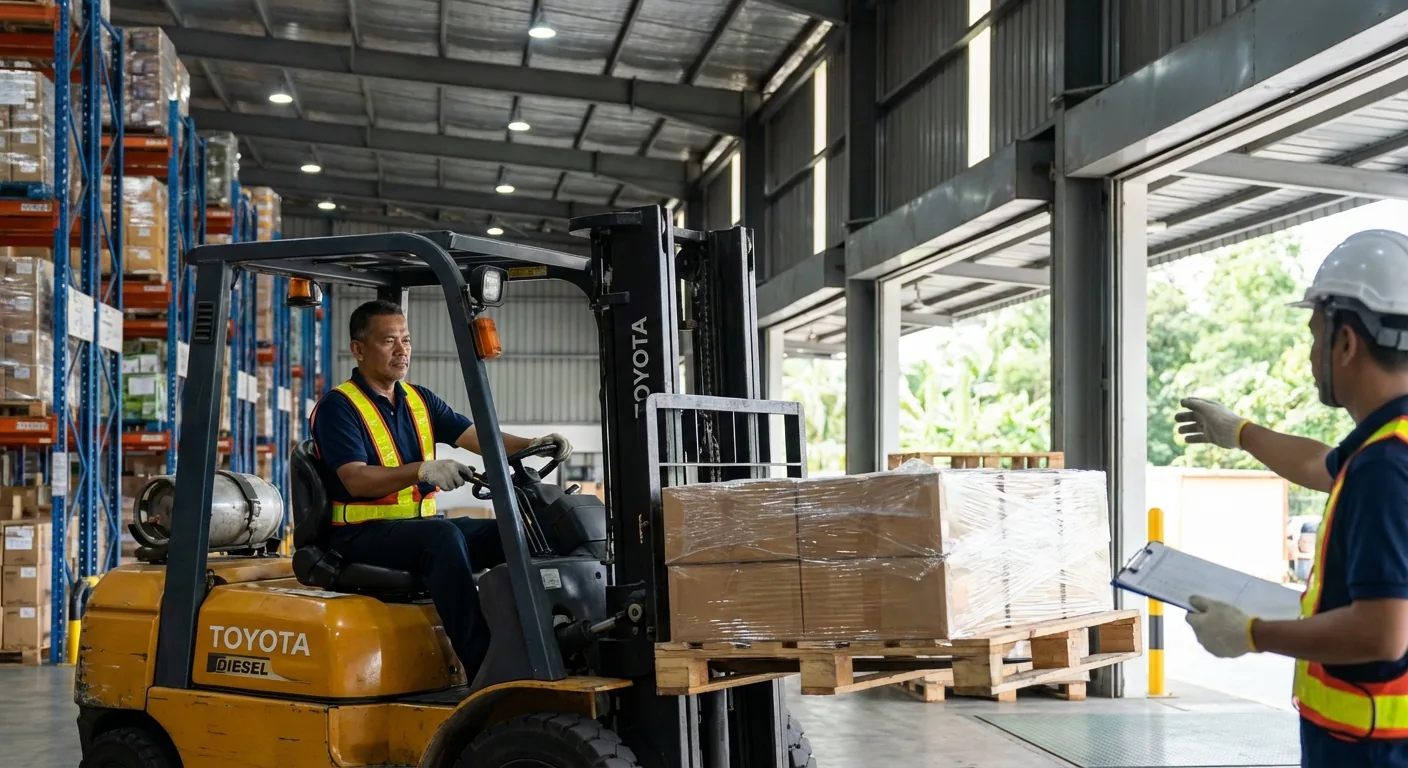
Start with the tyres. Check the air pressure on pneumatic tyres, that the tread is deep enough, and that there are no cracks or sharp objects embedded in them. Bald tyres lose grip and lengthen braking distance on slippery floors.
Test the brakes before driving out. Press the pedal; it should feel firm and hold, not sink. The handbrake must hold the forklift on a slope, and soft brakes mean the pads are worn.
Turn the steering left and right; it should move smoothly, because loose steering signals a hydraulic or gear problem. If the brakes sink or the tyres are bald, do not use the unit and report it. Service and maintenance are included in our rental package.
Horn, Lights and Seatbelt
The horn is a primary safety device, not an accessory, and must sound loud. Operators use the horn at junctions, doorways, and pedestrian areas, so a dead horn means other workers get no warning of your presence.
Check all the lights: headlights, the flashing warning beacon, and the reverse light. In a dim warehouse or on a night shift, working lights prevent collisions. The reverse light and warning sound are critical, because the rear of the forklift is the biggest blind spot.
The seatbelt saves lives during a tip-over, the most common cause of death. A belted operator stays inside the cabin, and all three of these must work 100% with no compromise.
Forks, Mast and Hydraulic System
The forks carry the entire load, so inspect them closely. Look for cracks, bends, or wear at the heel of the fork, the most stressed point. Make sure both forks are at the same height and their locking pins are secure so they cannot slide out.
Test the mast and hydraulics without a load first. Raise and lower the forks fully and tilt the mast forward and back; the movement should be smooth with no jerking. Jerky movement signals air in the system or a low hydraulic oil level.
Forks that drop on their own after being raised are a sign of a leaking hydraulic valve or cylinder. Cracked forks or a jerky mast are a serious hazard, so tag the unit 'do not use'.
Oil Levels, Battery and Leaks
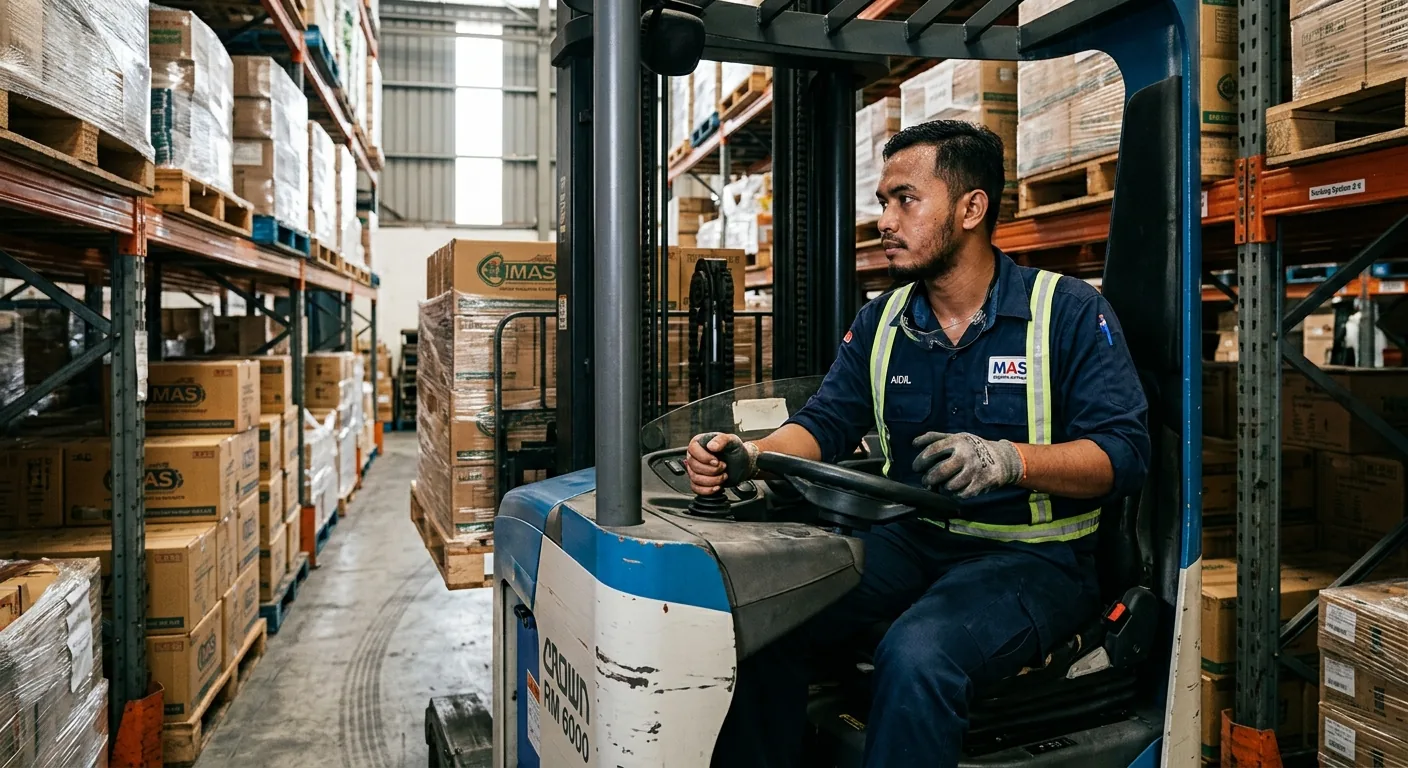
For a diesel forklift, check the engine oil, hydraulic oil, radiator water, and brake fluid levels while the engine is cold. Low levels shorten engine life and can cause the unit to die mid-job.
For electric and lithium forklifts, check the battery charge level before the shift. For lead-acid batteries, check the water level and that there is no corrosion on the terminals, while lithium batteries still need their charge indicator checked.
After that, look underneath the forklift. Oil or water spots mean there is a hydraulic, engine oil, or coolant leak. Top up low levels, charge the battery, and report any leaks immediately.
How to Use and Record This Checklist
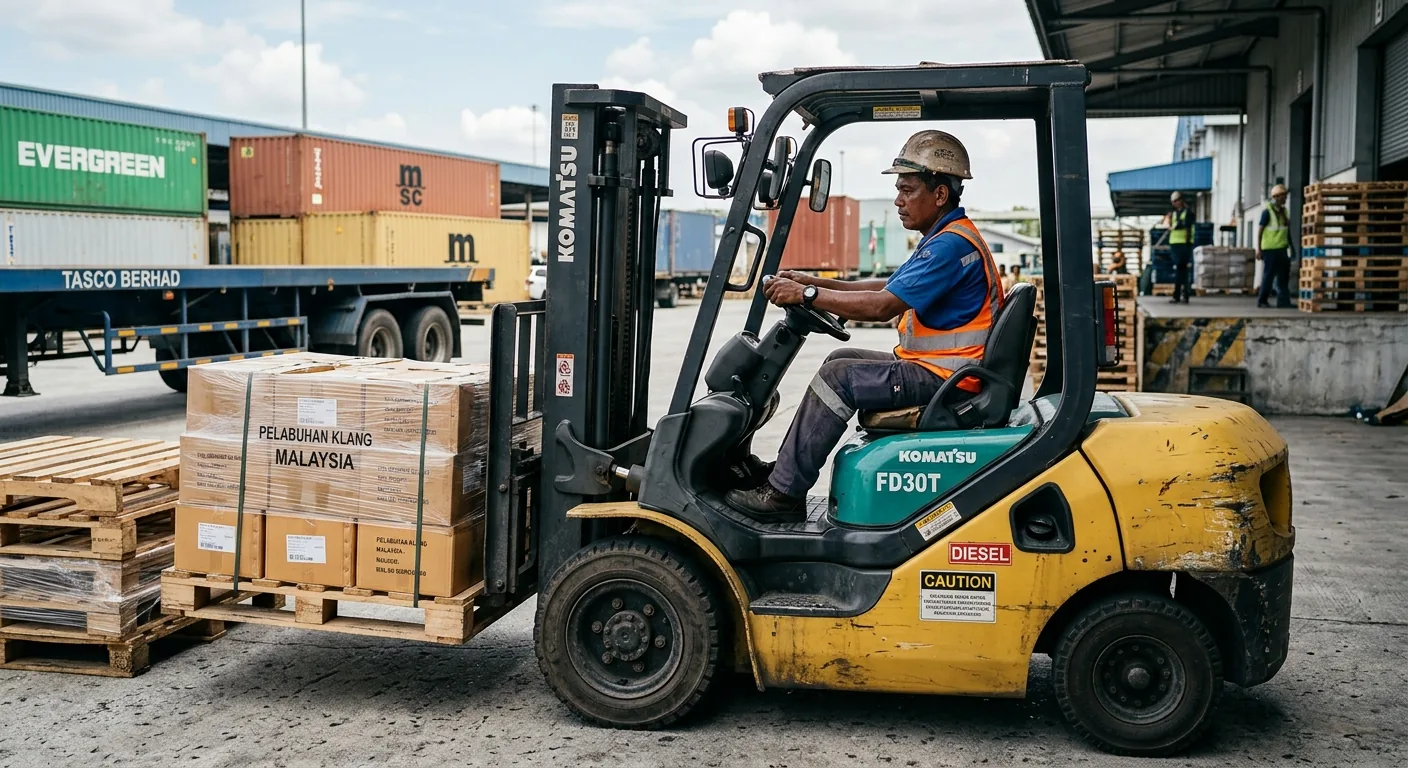
A checklist only works if it is used consistently. Assign an operator to run the inspection before every shift, and keep a printed copy on each forklift for easy reference.
Record every finding in writing: the date, the operator's name, and the status of each item. These records are proof of compliance if DOSH audits, and they help you spot recurring problems such as a tyre that keeps going flat.
If any item fails, tag the unit, report it, and wait for the repair. For our rental units, service and maintenance are included at no extra cost. A CIDB Green Card operator can be arranged if needed.
Summary — Checklist
- ✓Tyres: enough pressure, deep tread, no cracks or sharp objects embedded.
- ✓Brakes: pedal firm and holding, handbrake holds on a slope, does not sink to the floor.
- ✓Horn and lights: horn sounds loud, headlights, warning beacon, and reverse light all working.
- ✓Forks and mast: no cracks or bends, both forks at the same height, raise and lower smoothly with no jerking.
- ✓Hydraulic system: forks do not drop on their own after being raised, mast tilts smoothly.
- ✓Oil or battery level: engine, hydraulic and brake fluid sufficient (diesel), or battery fully charged (electric/lithium).
- ✓Leaks: no oil or water spots on the floor under the forklift.
- ✓Seatbelt: working, not torn, buckle secure, mandatory to wear during operation.
FAQ
How often should a forklift be inspected?
Every shift, before operation begins. This daily inspection aligns with DOSH guidelines and Act 520. It takes around 5 minutes and catches problems before they become a hazard or downtime.
Who should carry out the forklift inspection?
The operator who will use the unit on that shift. Operators holding a CIDB Green Card are trained to run this inspection as part of their safety training. For rental units, a Green Card operator can be arranged if needed.
What should you do if one item fails the inspection?
Do not use the unit. Tag the forklift 'do not use', report it, and wait for the repair. Critical items like brakes, cracked forks, or a faulty seatbelt endanger lives, and for our rental units service and repair are included in the package.
Is maintenance included for rental forklifts?
Yes, service and maintenance are included in our rental package. If a fault occurs, contact us and we will handle it. All-risks insurance is also available as an add-on for an extra charge, for wider coverage.
How long does the daily checklist take?
Around 5 minutes for 8 items. This short time protects workers' lives and saves thousands of ringgit in repair costs and downtime.
Further Reading
Need to Rent a Forklift?
From RM200/day — diesel, electric, reach truck. Accurate quote within 1 hour.
WhatsApp for a Quote