Reach Truck vs Forklift — Which Is the Right Choice for Your Warehouse?
Updated 2026-06-08
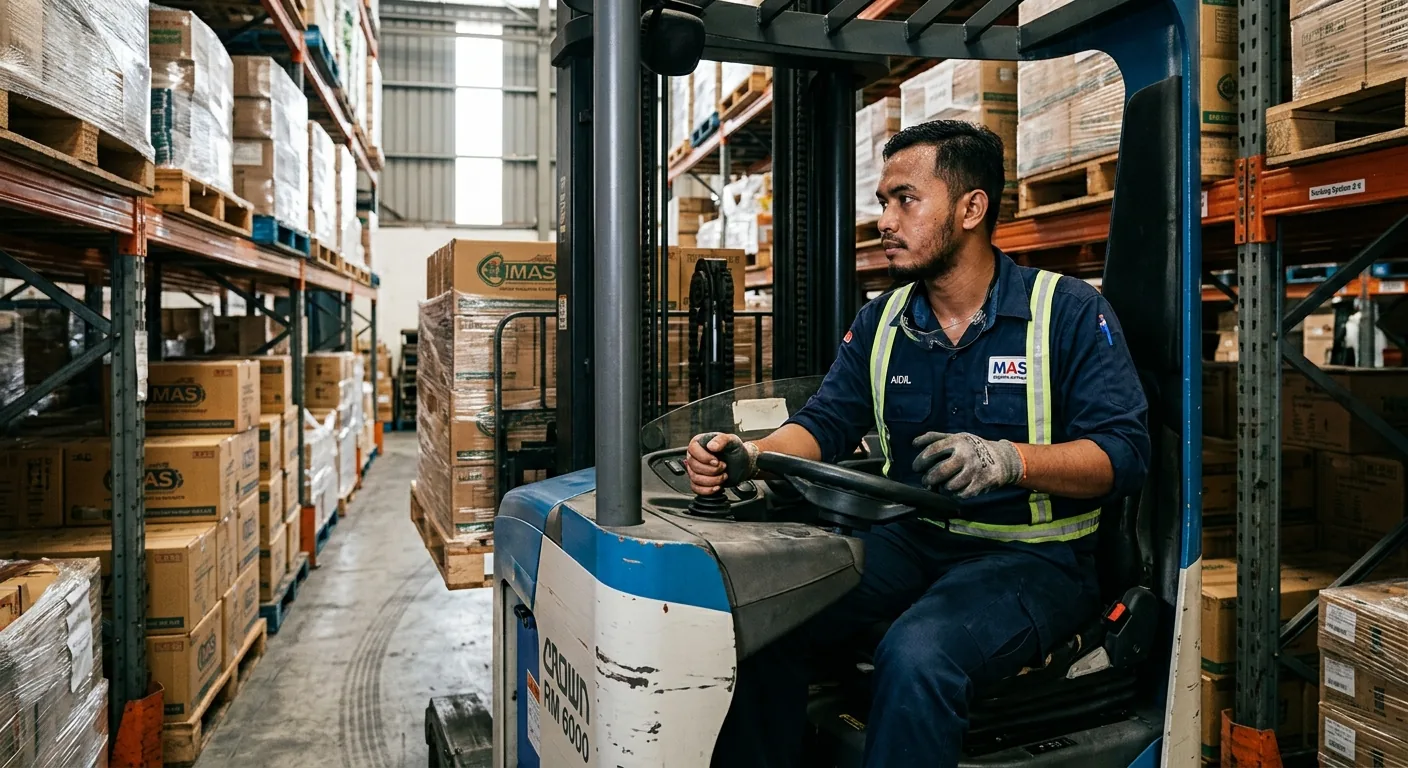
A reach truck suits high-racking warehouses and narrow aisles because it lifts higher in tight spaces. A counterbalance forklift suits general work, heavy loads and outdoor operations. Decide based on your rack height, aisle width and the type of loads in your warehouse.
Many warehouse operations get confused between a reach truck and a counterbalance forklift. Both lift pallets, but their design and use differ. Choose wrong, and you waste rack space or pay for capacity you never use.
A reach truck is built for narrow aisles and tall racking inside enclosed warehouses. A standard forklift is versatile for general work, heavy loads and outdoor areas.
This article compares the two on lift height, aisle width, load type and warehouse space. Decide which is right before you rent. Both types are available to rent from RM200/day.
What Is the Basic Difference Between a Reach Truck and a Forklift?
A reach truck and a counterbalance forklift solve different problems. A counterbalance forklift has a counterweight at the rear to balance the load on its front forks. That is why it needs no support legs and can drive straight up to the load.
This design makes it stable for heavy loads and outdoor work. A reach truck, on the other hand, has a reach mechanism that extends the forks forward to reach the rack. It then pulls the load back close to the machine body.
Support legs replace the large counterweight, so its body is smaller and turns within tight spaces. As a result, a standard forklift is wider and needs broad aisles. A reach truck is purpose-built for dense racking warehouses.
Both can be rented. Diesel, electric, lithium and reach truck are among the 6 types available.
Takeaway: identify whether your work needs high lifting in narrow aisles, or versatile general lifting.
Lift Height: Reach Truck Wins on Tall Racking
This is the most obvious difference. A reach truck is built to lift pallets to tall racks in dense warehouses. Its multi-stage mast and reach mechanism let it reach the top levels of racking that a standard forklift struggles to handle safely.
A standard counterbalance forklift is better suited for low to medium lifting. For example, unloading lorries, stacking on the floor, or racking that is not too tall. When loads rise high, a standard forklift needs a bigger counterweight and becomes less practical in narrow aisles.
For warehouses with multi-level racking, a reach truck unlocks vertical storage capacity that a standard forklift cannot reach. Conversely, if most of your work is at floor level, the reach truck's high capacity may go to waste.
Takeaway: measure the tallest rack height in your warehouse. If it exceeds a standard forklift's comfortable reach, choose a reach truck.
Aisle Width and Warehouse Space
A reach truck shines in narrow-aisle warehouses. Its body is small and support legs replace the large counterweight, so it can operate in far narrower aisles. You can arrange racks closer together and fit more stock in the same space.
A counterbalance forklift needs wider aisles to turn and approach loads safely. In a space-constrained warehouse, a standard forklift may force you to space racks apart. This sacrifices storage capacity.
But in open areas, the reach truck's narrow-aisle advantage is irrelevant. For example, yards, outdoor unloading areas and open factories. Here a standard forklift is more practical and faster.
For 24-hour delivery in the Klang Valley (KL & Selangor), both types can be delivered straight to your warehouse. Outside the Klang Valley depends on location, with a delivery charge.
Takeaway: if maximising indoor storage space is a priority, a reach truck allows narrower aisles and denser stock.
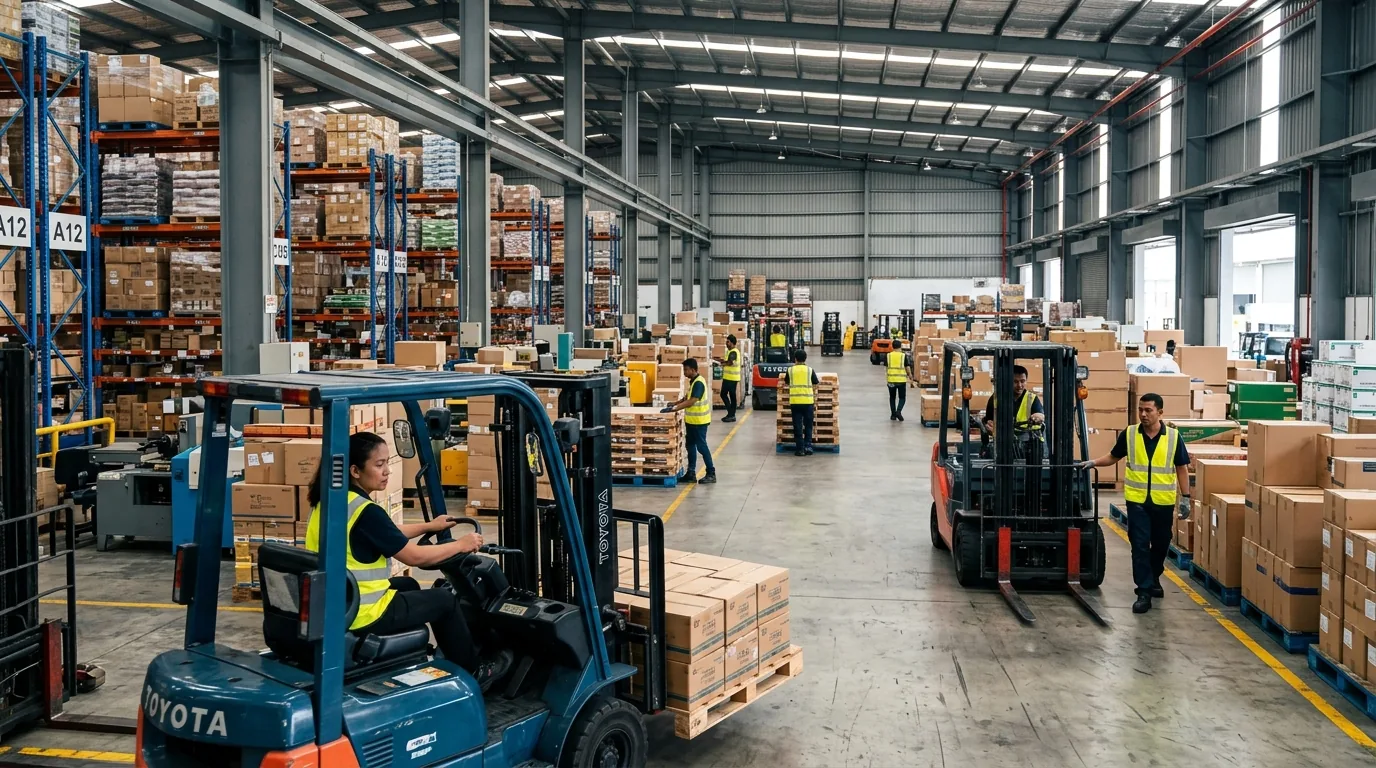
Load Type and Working Environment
A counterbalance forklift is more versatile across different loads. The diesel version handles heavy loads and withstands outdoor work such as uneven ground, rain and lorry unloading areas. Its lift capacity is generally more flexible for large and uneven loads.
A reach truck, meanwhile, is optimised for standard-size pallets in enclosed, flat-floored warehouses. It is not for outdoor work or rough surfaces. Its low-to-the-ground design and wheels are made for concrete warehouse floors, not muddy ground.
Most reach trucks are electric or lithium, so there are no fumes. This suits indoor operations, food warehouses and air-conditioned spaces. A diesel forklift is better outdoors where ventilation is not an issue.
Takeaway: for enclosed warehouses, flat floors and standard pallets, choose a reach truck. For outdoor work, rough surfaces and uneven loads, choose a counterbalance forklift.
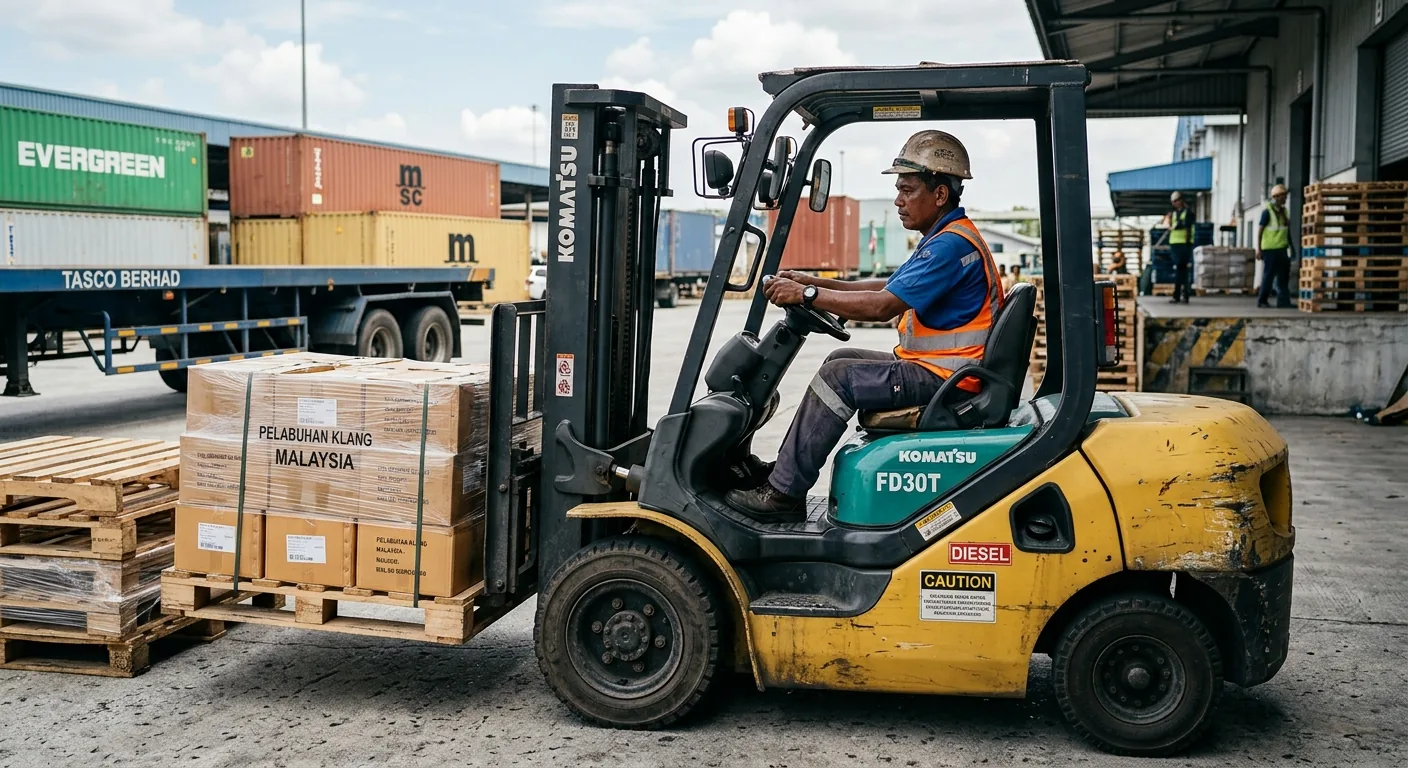
Cost, Maintenance and When You Should Rent
Rather than buying outright, many warehouse operations choose to rent so they can match the machine to the actual work. Rental starts from RM200/day with a minimum 1-day rental. So you can test a reach truck or forklift before committing.
Service and maintenance are included in the rental. If a breakdown happens during the rental period, it is repaired at no separate repair cost. (Note: this is repair, not a free swap to a new unit.)
All-risks insurance is available as an add-on for an extra charge. A licensed CIDB Green Card operator can also be arranged if you need a driver who complies with Act 520 and DOSH requirements.
This matters if your warehouse demand fluctuates. Rent electric for the busy indoor season, or diesel for outdoor projects, without being tied to one machine.
Takeaway: renting lets you match the machine to your real needs each season. Request a quote for both reach truck and forklift, then compare the real costs.
Summary — Checklist
- ✓Measure the tallest rack height in your warehouse. Exceeds a standard forklift's reach? Choose a reach truck
- ✓Check your existing aisle width. Narrow aisles and dense racking favour a reach truck
- ✓Decide the environment: enclosed, flat-floored warehouse (reach truck) vs outdoor, rough-surface work (counterbalance forklift)
- ✓Assess the load type: standard indoor pallets vs heavy, uneven loads
- ✓Choose the power: electric or lithium for fume-free indoor use, diesel for outdoors
- ✓Rent for a minimum 1 day from RM200 to test a type before committing
- ✓Ask about a CIDB Green Card operator and all-risks insurance (add-on) if needed
FAQ
Can a reach truck be used for outdoor work?
Not recommended. A reach truck is built for flat concrete floors in enclosed warehouses. For outdoor work, rough surfaces or uneven ground, a diesel counterbalance forklift is more suitable and stable.
Which is cheaper to rent, a reach truck or a forklift?
Both start from RM200/day with a minimum 1-day rental. The real cost depends on type, capacity and duration. Request a quote for both types and compare against your warehouse needs.
Can a reach truck lift higher than a standard forklift?
Yes. A reach truck is purpose-built to reach tall racks in tight spaces. A standard counterbalance forklift is better suited for low to medium lifting and heavy loads.
Are service and an operator included in the rental?
Service and maintenance are included in the rental (repair, not a free unit swap). A licensed CIDB Green Card operator can be arranged. All-risks insurance is available as an add-on for an extra charge.
Further Reading
Need to Rent a Forklift?
From RM200/day — diesel, electric, reach truck. Accurate quote within 1 hour.
WhatsApp for a Quote