How to Choose a Forklift for Your Business — Match the Machine to the Job
Updated 2026-06-24
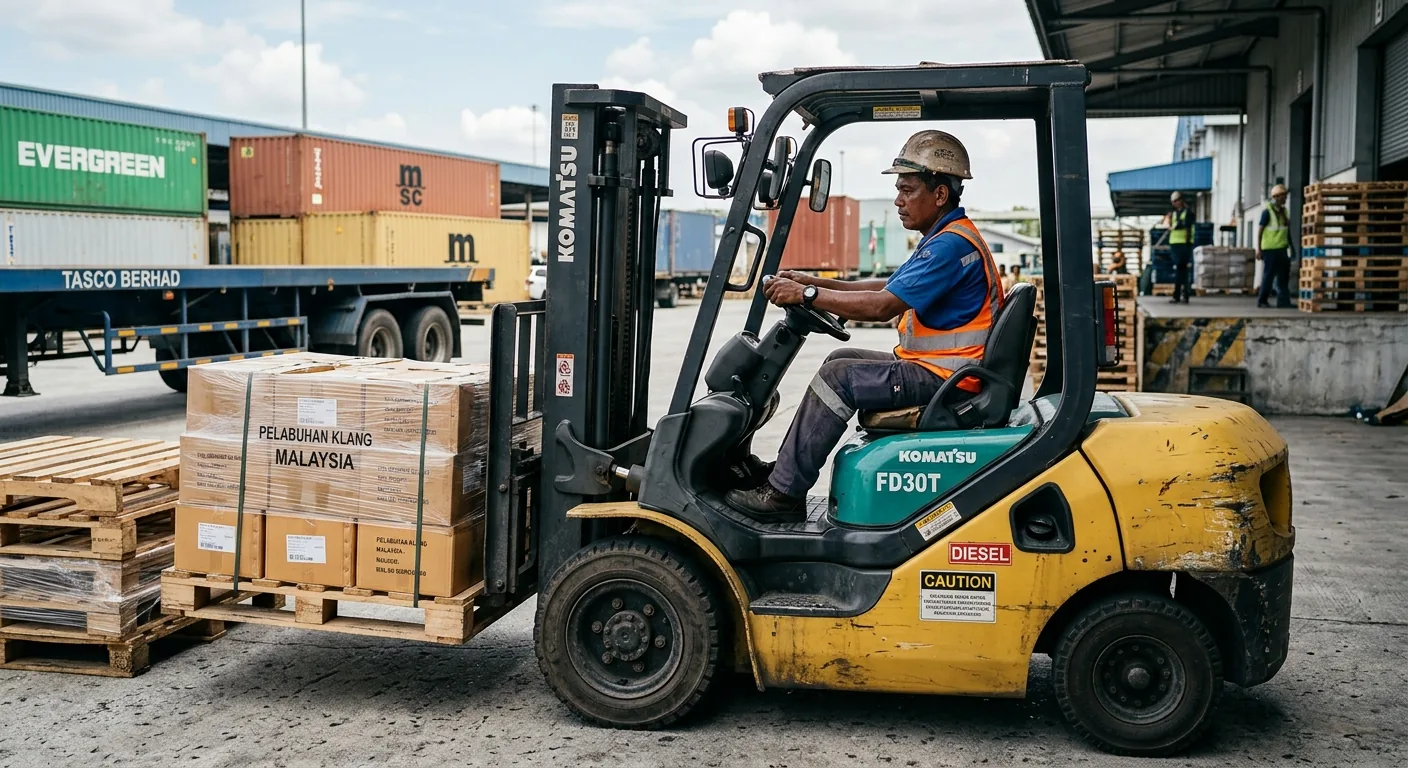
To choose a forklift, match four key things. Load capacity in tons, engine type, work environment, and your warehouse aisle width.
Diesel suits outdoor work. Electric suits enclosed indoor warehouses. A reach truck is best for narrow aisles and tall racking.
Choose the wrong forklift and you pay more while work slows down. A forklift that is too small cannot lift the load, while one that is too big will not fit your warehouse aisles.
Many SMEs get it wrong because they focus on price, not the fit for the job. This guide helps you match a forklift to the task by capacity, type, environment, and space. Rentals start from RM200/day, so you can test the right type without a big commitment.
Start with Load Capacity (Tons)
The heaviest load you lift determines your forklift. Forklifts are rated by capacity in tons, from 1.5 tons, 2.5 tons, 3 tons, and upwards. Pick a capacity above your maximum load, never just barely enough.
Example: if your heaviest pallet is 2.2 tons, take a 2.5-ton unit, not a 2-ton one. Capacity is rated at a set distance from the forks (load centre), and long or high-lifted loads reduce it. So check the unit's load chart, not just the ton figure on the plate.
Takeaway: list your maximum load in tons, then pick one level higher for a safety margin.
Pick the Type: Diesel, Electric or Reach Truck
We supply six forklift types: diesel, electric, reach truck, lithium, stacker, and hand pallet. The three most asked about are below.
Diesel is powerful for outdoor work and heavy loads at construction sites or yards. It is rugged but produces fumes, so it is not suited to enclosed spaces. Electric, on the other hand, is clean, quiet, and best for indoor warehouses, food factories, or pharmaceutical plants.
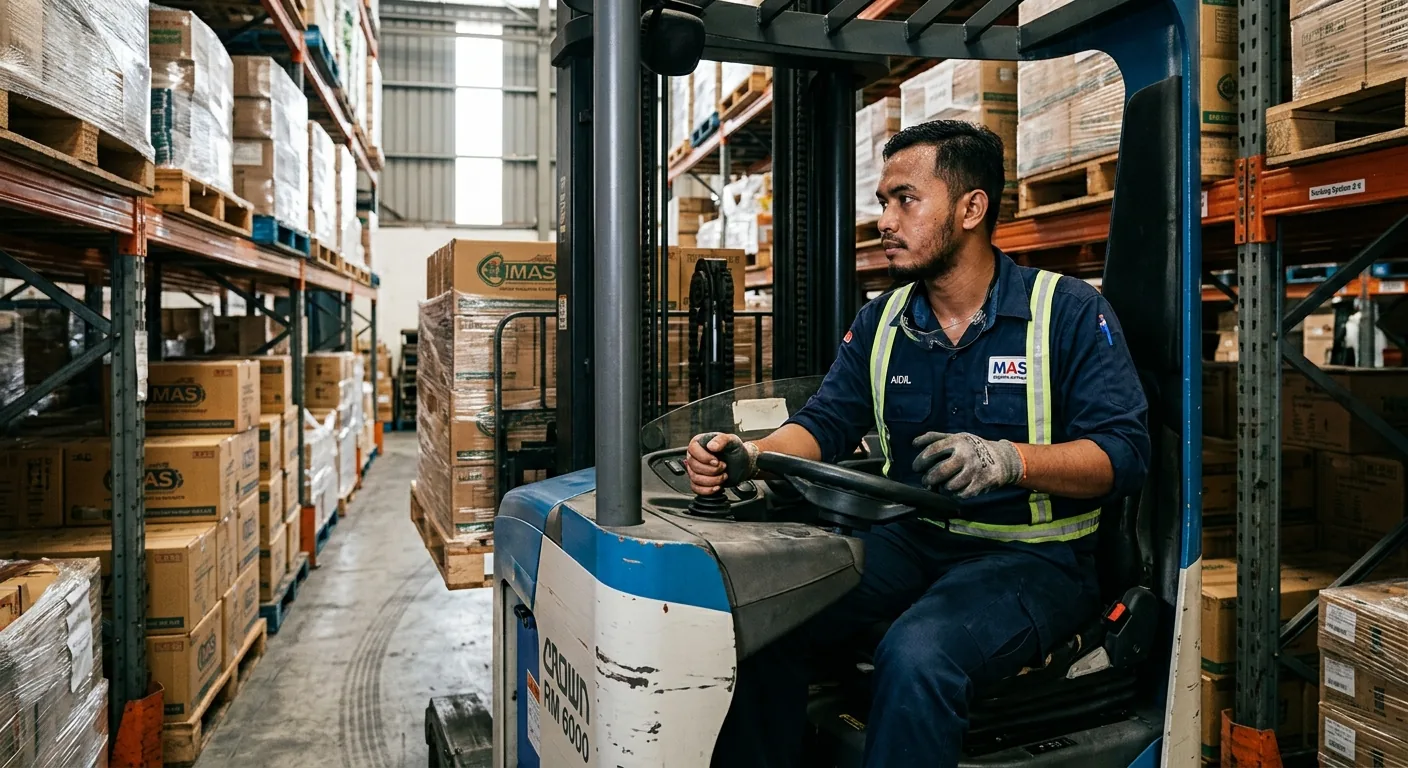
Electric units need charging, and the lithium version charges faster for two-shift operations. A reach truck is built for narrow aisles and tall racking, reaching top-level pallets that a normal forklift cannot. For light loads or short distances, a stacker and hand pallet are cheaper.
Takeaway: decide whether your work is indoor or outdoor first. That eliminates half the options.
Work Environment: Indoor Warehouse vs Outdoor Site
Where the forklift is used determines the engine type and tyres. Indoor warehouses and outdoor sites have very different needs.
Indoor warehouses have flat concrete floors, enclosed space, and air that must stay clean. Electric or lithium forklifts suit best because there are no fumes and noise is low. Solid rubber (cushion) tyres are good for smooth floors inside a building.
Outdoor sites or yards have uneven, muddy or rocky ground, and are exposed to the weather. Diesel with pneumatic tyres suits better thanks to stronger grip and durability, and electric is not recommended for wet ground.
Takeaway: match the tyres and engine to the work surface, not just the load size. A mismatch can damage floors or weaken grip.
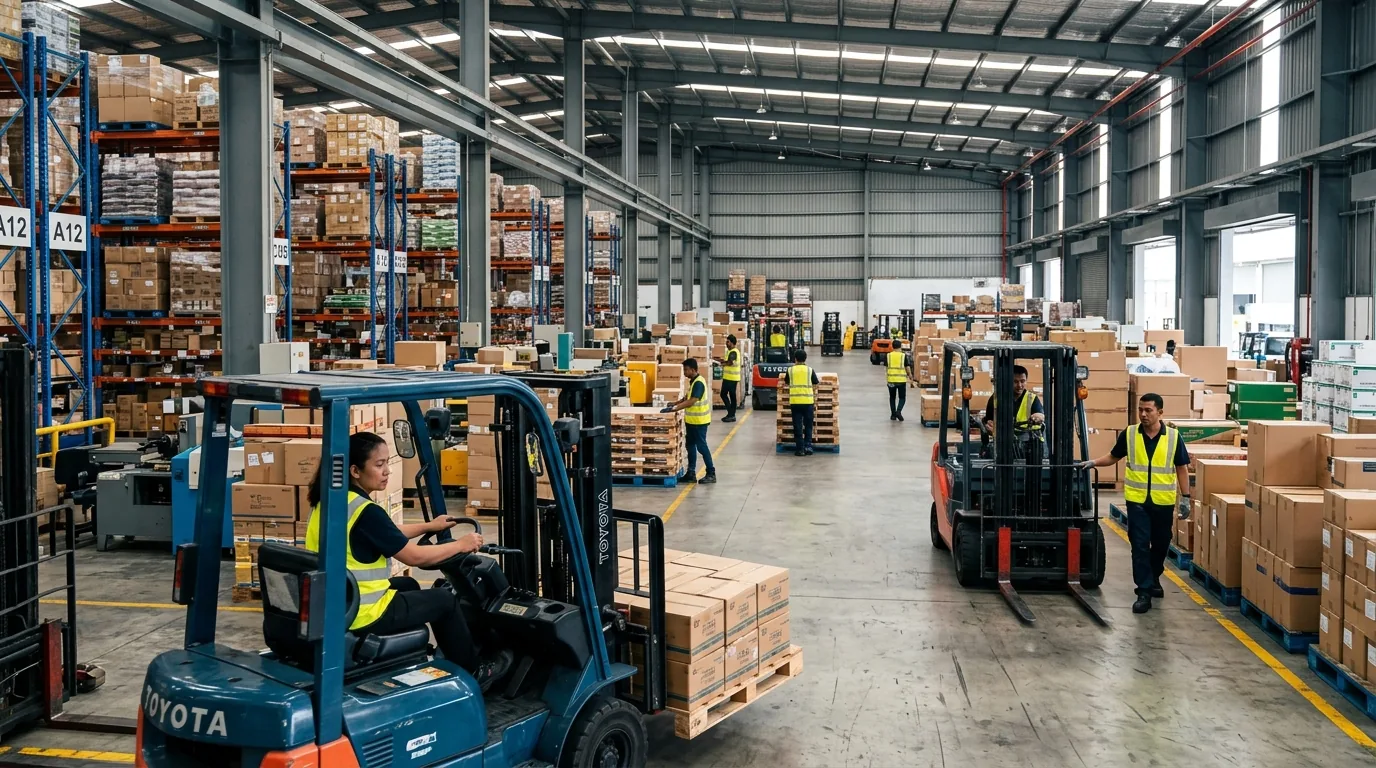
Measure Your Space and Aisle Width
The right forklift must be able to move within your space. Many SMEs overlook aisle width and ceiling height, then find the rented unit cannot turn.
Measure three things before choosing. The working aisle width, the ceiling or door height, and the height of your top racking. A standard counterbalance forklift needs a wider aisle to turn.
If your aisles are narrow, a reach truck or stacker suits better thanks to a smaller turning radius. For tall racking, check the maximum lift (mast height), as many are limited to three or four metres. Also measure the door height so the upright mast can pass through.
Takeaway: bring your aisle width, ceiling height, and rack height when you talk to us. That determines the size and mast that will fit.
Rent or Buy: Match It to How Often You Use It
The next question is whether to rent or buy. The answer depends on how often and how long you use it.
Renting suits seasonal work, short-term projects, or when you are not yet sure which type fits. Rentals start from RM200/day, minimum one day, with service and maintenance included. All-risks insurance is available as an add-on for an extra charge.
Buying is more worthwhile if you use a forklift every day all year round for years, but you bear the service, maintenance, and depreciation yourself. For the Klang Valley (KL and Selangor), rental units are delivered within 24 hours, while outside the Klang Valley it depends on location with a delivery charge.
Takeaway: if you use it rarely or are still testing types, rent first. You avoid a large outlay and can switch types when your needs change.
Summary — Checklist
- ✓List your maximum load in tons, then pick a forklift one level higher for a safety margin
- ✓Decide whether the work is indoor (warehouse) or outdoor (site) first — this eliminates half the type options
- ✓Match the engine: diesel for outdoor/heavy loads, electric or lithium for indoor warehouses, reach truck for narrow aisles & tall racking
- ✓Measure aisle width, ceiling/door height, and tallest rack height before choosing the size and mast
- ✓Check the unit's load chart, since capacity drops when loads are long or lifted high, not just the ton figure on the plate
- ✓Match the tyres to the surface: solid rubber for indoor floors, pneumatic for uneven outdoor ground
- ✓Rent first (from RM200/day, minimum 1 day) if you use it rarely or are still testing which type fits
FAQ
How do I know what forklift capacity I need?
Work out the heaviest load you will lift in tons, then pick a forklift one level higher.
Example: for a 2.2-ton load, take a 2.5-ton unit. Also check the load chart, since capacity drops when a load is lifted high or is long.
Is a diesel or electric forklift better for an indoor warehouse?
Electric or lithium suits an indoor warehouse better. There are no fumes and noise is low, which matters for enclosed spaces, food factories or pharmaceutical plants. Diesel produces fumes, so it suits outdoor work and yards better.
Which forklift suits narrow warehouse aisles?
A reach truck or stacker suits narrow aisles best. The turning radius is smaller and they can reach tall racking.
A standard counterbalance forklift needs a wider aisle to turn. Measure your aisle width first.
Should I rent or buy a forklift?
Renting suits seasonal work, short projects, or when you are not yet sure which type fits. It starts from RM200/day, minimum 1 day, with service & maintenance included. Buying is more worthwhile if you use it every day all year round for years.
Can a forklift operator be arranged with the rental?
Yes, an operator with a CIDB Green Card can be arranged. Contact us via WhatsApp.
Tell us the type of work and your location. We will arrange a suitable unit and operator.
Further Reading
Need to Rent a Forklift?
From RM200/day — diesel, electric, reach truck. Accurate quote within 1 hour.
WhatsApp for a Quote