How to Operate a Forklift Correctly for Beginners — A Step-by-Step Guide
Updated 2026-06-15
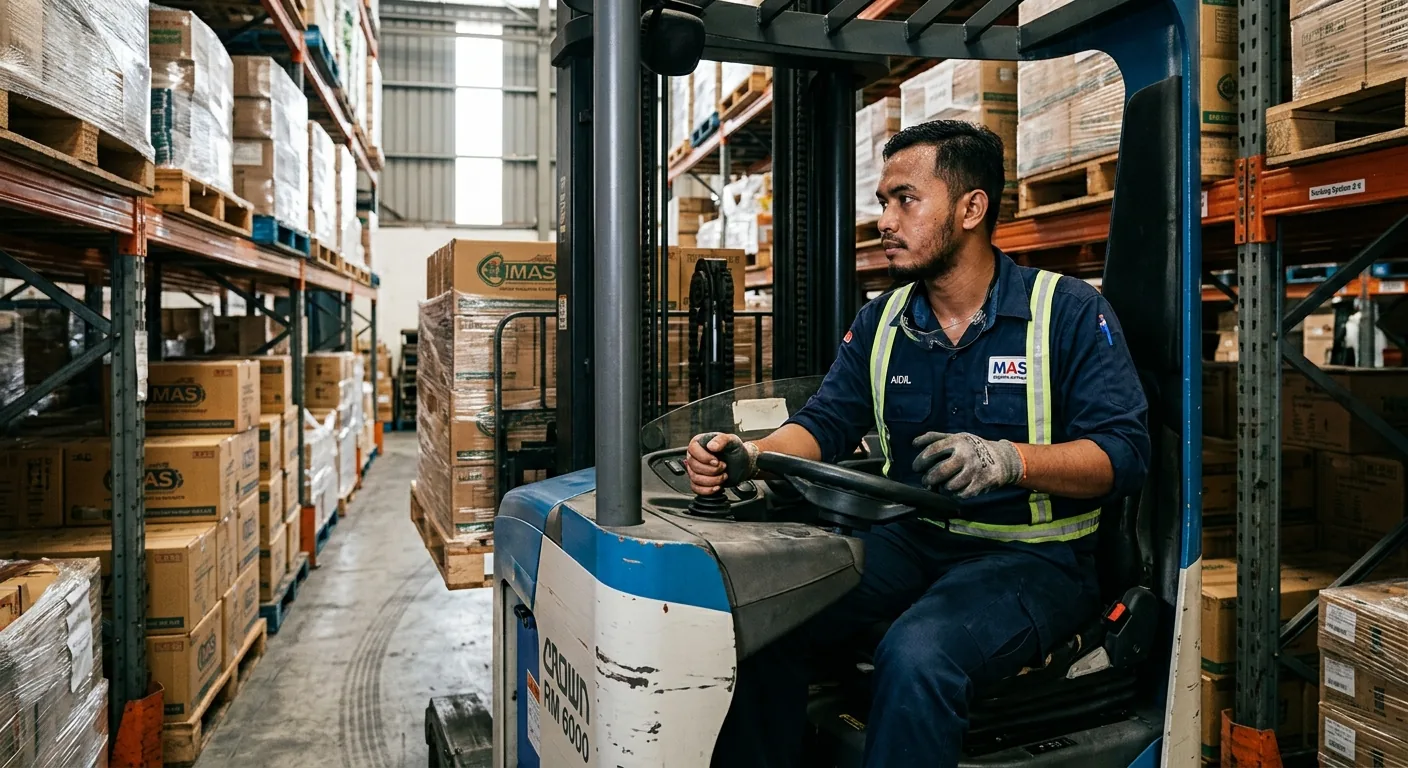
To operate a forklift correctly, run a pre-start check on the oil, brakes, tyres and forks first, then drive within capacity limits with the load low. Lift and stack loads level only after a full stop. In Malaysia, only CIDB Green Card licensed operators are allowed under Act 520.
A forklift speeds up lifting and stacking in a warehouse, but misuse can cause serious accidents. Many beginners think driving one is just like driving a car, when balance, capacity limits and how you lift a load are all different.
This guide explains how to operate a forklift step by step, from the pre-start check through to parking. In Malaysia, only CIDB Green Card licensed operators are allowed to handle a forklift under Act 520.
Pre-Start Checks Before You Start the Forklift
Do a visual check every time before you start the engine. For a diesel forklift, check the engine oil, hydraulic oil and radiator coolant levels. Make sure the tyres are not flat or cracked, and the forks are not bent.
Test the brakes, horn, lights and steering before moving off. For an electric or lithium forklift, check the battery level. Inspect the lift chains and hydraulic hoses too, because a small leak can cause a lift failure.
If you are renting, the daily check is still the operator's responsibility.
Takeaway: Run a 5-minute checklist every morning; don't assume the unit is fine just because it ran yesterday.
Understand Capacity Limits and Load Centre
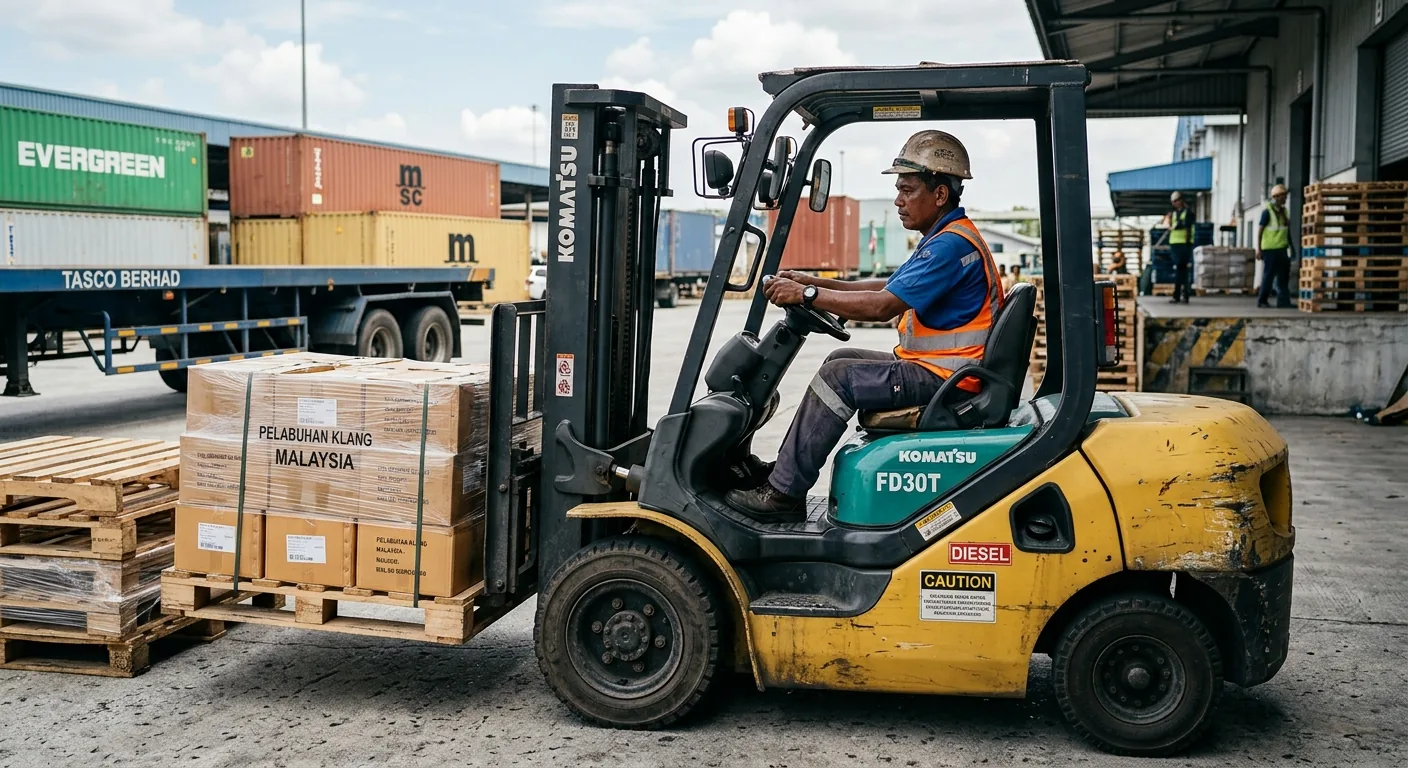
Every forklift has a capacity plate that states the maximum weight, measured at a set load centre, usually 500mm or 600mm from the back of the forks. If the load's centre of gravity sits further forward, the actual capacity drops.
For example, a 3 ton forklift at a 500mm load centre may only be safe to lift 2 ton if the load centre is 900mm. Lifting beyond the limit tips the forklift forward. Don't add extra counterweight at the back to balance it; that breaks the manufacturer's specifications.
Takeaway: Read the capacity plate and work out the load centre. Don't lift beyond the stated limit.
How to Lift and Stack a Load Correctly
Approach the pallet slowly and straight on, not at an angle. Insert the forks fully under the load so the weight is spread evenly, and adjust the fork spacing to suit the pallet size.
When driving, lift the load 10–15cm off the floor and tilt the mast slightly back. Don't drive with the load raised high, because it raises the centre of gravity and the risk of tipping.
To stack on high racking, come to a full stop first, then lift straight up. Make sure the load clears the rack space before pushing forward, lower it slowly and pull the forks out.
Takeaway: Drive with the load low; lift high only after stopping.
Balance, Speed and Direction of Travel
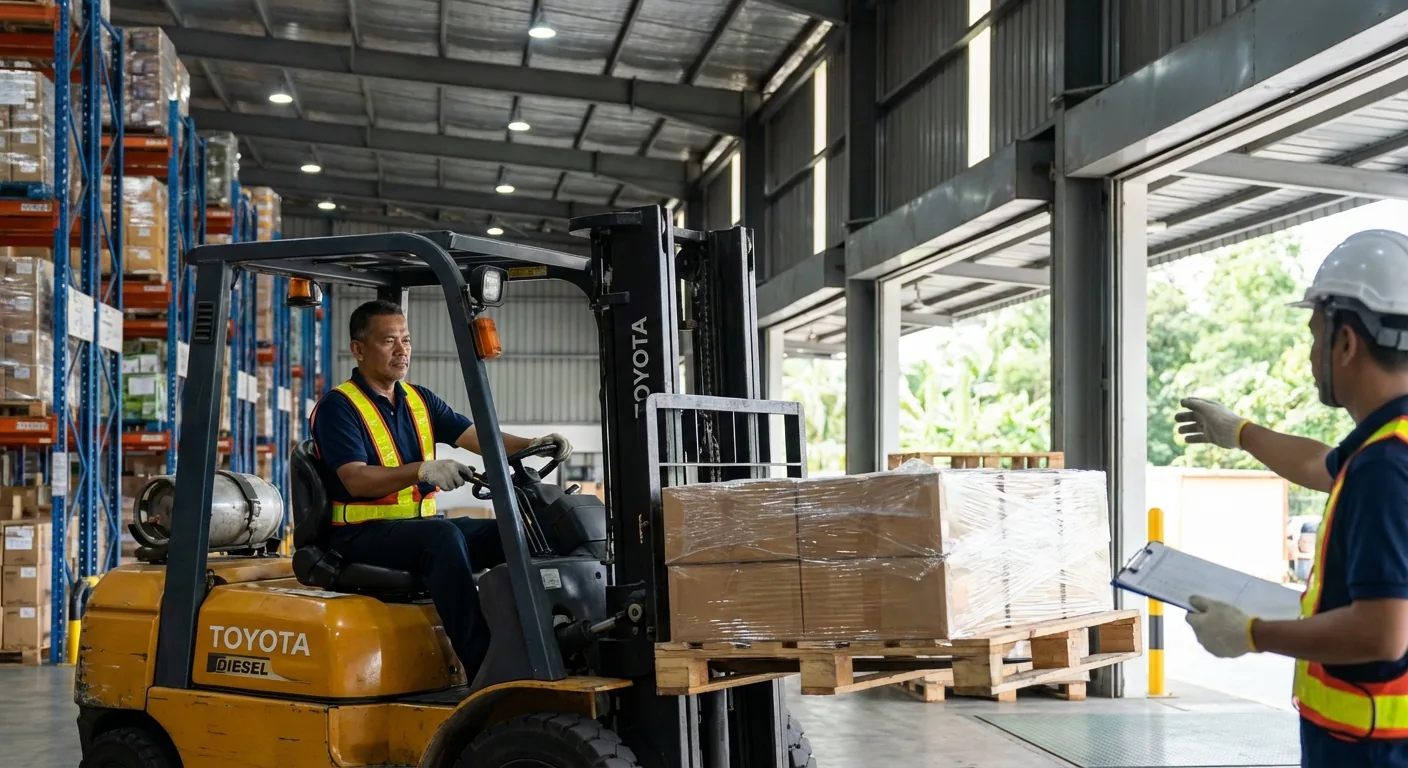
A forklift steers from the rear wheels, so the back end swings out wider when turning. Take corners slowly and leave room so the rear end doesn't hit racking or workers.
Wet, oily or potholed floors reduce grip and increase braking distance. Avoid sudden braking with a raised load, because it can throw the load off.
Always look in the direction of travel; if the load blocks your view, drive in reverse. Sound the horn at junctions, and never let anyone stand under raised forks.
Takeaway: Drive slowly and leave room for the rear end.
How to Park a Forklift Safely
When you finish, park the forklift on level ground, away from emergency routes and exits. Lower the forks fully flat to the floor so people don't trip and the hydraulic pressure is released. Tilt the mast slightly forward so the fork tips touch the floor.
Apply the handbrake, switch off the engine and remove the key. For an electric or lithium forklift, disconnect the power if it needs charging.
Don't leave the forklift with a raised load or the engine running unattended. If it's on a slope, chock the wheels so it can't roll.
Takeaway: Forks flat, handbrake on, key out every time you get off.
Why a Licensed Operator Is Mandatory
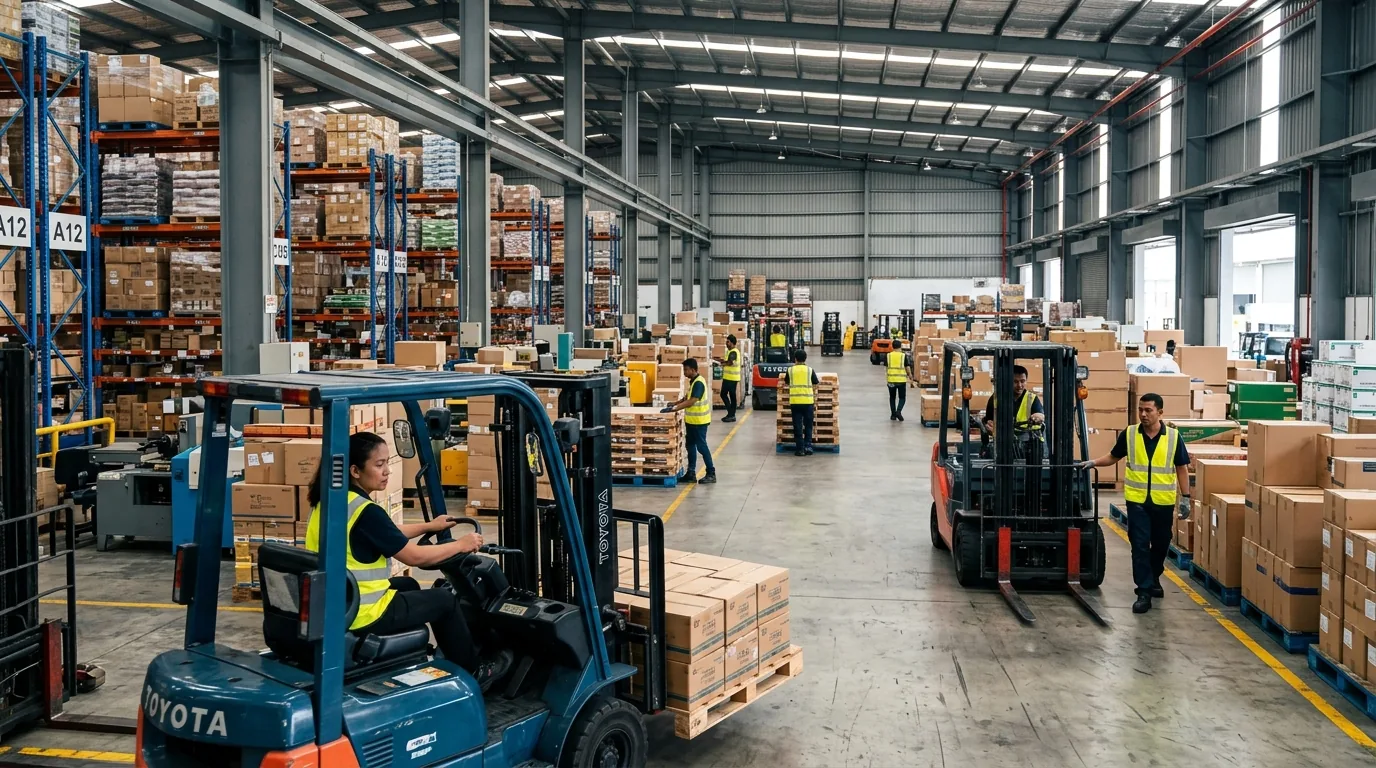
In Malaysia, operating a forklift is more than knowing how to press a pedal. Under the Occupational Safety and Health Act 1994 (Act 514) and DOSH regulations, only trained operators are allowed. The CIDB Green Card serves as recognised proof of site safety training.
Formal training teaches skills including load calculation and emergency control. If a forklift starts to tip, don't jump out; hold the steering wheel and lean in the opposite direction.
If you are renting, a CIDB Green Card operator can be arranged with the unit, saving you training costs.
Takeaway: Don't let untrained workers operate a forklift; ask for a CIDB Green Card licensed operator to avoid fines.
Summary — Checklist
- ✓Run a pre-start check every morning: oil, brakes, horn, steering, tyres, forks and lift chains
- ✓Read the capacity plate and work out the load centre; don't lift beyond the stated limit
- ✓Insert the forks fully, lift the load 10–15cm, tilt the mast back for driving
- ✓Drive slowly, leave room for the rear end, drive in reverse if the load blocks your view
- ✓Stack loads only after a full stop: lift straight up, set down level on the rack
- ✓Park the forklift with the forks flat on the floor, handbrake on and key removed
- ✓Use only CIDB Green Card licensed operators for Act 514 compliance
FAQ
Can I operate a forklift without a licence in Malaysia?
No. Under Act 514 and DOSH regulations, only trained and competent operators are allowed to handle a forklift at the workplace.
The CIDB Green Card serves as recognised proof of training. Operating without the qualification can lead to fines and adds to the accident risk.
What is load centre and why does it matter?
Load centre is the distance from the load's centre of gravity to the back of the forks, usually 500–600mm. If the centre of gravity sits further forward, the actual capacity drops. Ignoring it can tip the forklift forward even if the weight looks within the limit.
How high should I raise the load while driving?
Raise the load only about 10–15cm off the floor while moving, and tilt the mast slightly back.
Driving with the load raised high increases the centre of gravity and the risk of tipping. Lift high only when the forklift is at a full stop at the stacking location.
Can I rent a forklift with an operator included?
Yes. A CIDB Green Card operator can be arranged with the unit you rent, saving training costs and ensuring compliance.
Rental prices start from RM200/day, with 24-hour delivery in the Klang Valley. WhatsApp us for packages.
What should I do if the forklift starts to tip over?
Don't jump out. Hold the steering wheel firmly, brace your feet, and lean your body in the opposite direction to the way the forklift is tipping.
Jumping out is more dangerous because the operator can be crushed. Formal training teaches this emergency response.
Further Reading
Need to Rent a Forklift?
From RM200/day — diesel, electric, reach truck. Accurate quote within 1 hour.
WhatsApp for a Quote